
Infrared Heating Systems UK are becoming more popular in homes and offices because they promise efficient heating and lower energy waste.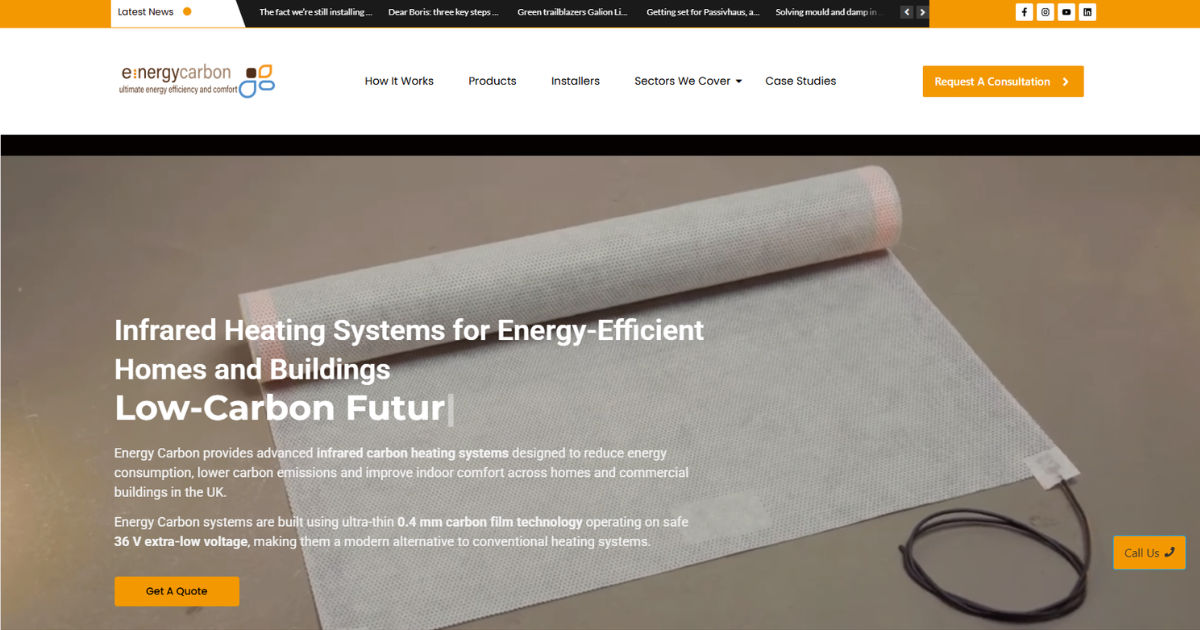
Understanding how much electricity Infrared Heating Systems UK use is important for anyone thinking about installing them. Many people also compare Infrared Heating Systems UK with traditional electric heaters to see if they are cheaper in the long run.
In this guide, we will explain how Infrared Heating Systems UK work, how much electricity they use, what affects their consumption, and whether they are cost-effective.
We will also look at real-world examples, efficiency factors, and practical tips to reduce energy bills while using Infrared Heating Systems UK.
Infrared Heating Systems UK can seem complex at first, but this guide breaks everything down into simple explanations suitable for everyday readers.
What Are Infrared Heating Systems?
Infrared heating works differently from traditional convection heating. Instead of warming the air, it directly heats objects, walls, and people in a room.
Infrared Heating Systems UK (1) are designed to use electric energy and convert it into infrared radiation. This radiation travels through the air without heating it much, which means less energy loss.
Infrared Heating Systems UK (2) are often used in homes, offices, warehouses, and even outdoor spaces because they provide targeted warmth.
The key advantage is efficiency. Infrared Heating Systems UK (3) reduce wasted energy by focusing heat exactly where it is needed.
How Infrared Heating Works
Infrared panels contain heating elements that emit infrared waves when electricity passes through them. These waves are absorbed by surfaces and objects.
Infrared Heating Systems UK (4) operate on the same principle as sunlight, where warmth is felt directly on the skin without heating the air first.
Because of this method, Infrared Heating Systems UK (5) can make a room feel warm faster than traditional radiators.
Unlike gas systems, Infrared Heating Systems UK (6) rely entirely on electricity, making them easy to install but dependent on energy prices.
Electricity Consumption Basics
Electricity usage depends on wattage, usage time, and insulation quality of the building.
Infrared Heating Systems UK (7) typically range between 300W and 1200W per panel, depending on size and application.
If a 600W panel runs for 5 hours, it uses 3 kWh of electricity.
Infrared Heating Systems UK (8) are often used intermittently rather than continuously, which can reduce total consumption.
A key factor is that Infrared Heating Systems UK (9) do not need to stay on all day to maintain comfort.
Average Electricity Usage in UK Homes
In a typical UK home, usage varies based on room size and insulation.
Infrared Heating Systems UK (10) installed in a well-insulated room may consume around 1–3 kWh per day per room.
In poorly insulated spaces, Infrared Heating Systems UK (11) may need to run longer, increasing consumption.
However, users often report that Infrared Heating Systems UK (12) still consume less energy overall compared to convection heaters.
Cost of Running Infrared Heating in the UK
Electricity prices in the UK play a major role in running costs.
Infrared Heating Systems UK (13) cost can be estimated by multiplying energy use (kWh) by electricity rate.
If electricity costs £0.25 per kWh, a 600W panel running 5 hours costs about £0.75 daily.
Infrared Heating Systems UK (14) are considered cost-effective when used in targeted zones instead of whole-house heating.
Many homeowners switch to Infrared Heating Systems UK (15) to reduce reliance on gas boilers.
Factors That Affect Electricity Usage
Several factors influence how much electricity is consumed.
Infrared Heating Systems UK (16) efficiency depends heavily on insulation quality.
Room size is also important. Infrared Heating Systems UK (17) used in larger rooms will naturally consume more energy.
Temperature settings also matter. Infrared Heating Systems UK (18) running at higher temperatures will use more electricity.
Usage patterns affect consumption too. Infrared Heating Systems UK (19) used for short bursts are more efficient.
Efficiency Compared to Traditional Heating
Infrared heating is often more efficient because it avoids heating unused air.
Infrared Heating Systems UK (20) transfer heat directly to objects, reducing heat loss.
Electric radiators, in contrast, warm air which rises and escapes faster.
Infrared Heating Systems UK (21) can reduce overall heating time in many homes.
However, Infrared Heating Systems UK (22) are not always cheaper if used continuously in large, poorly insulated spaces.
Where Infrared Heating Works Best
These systems are ideal for specific environments.
Infrared Heating Systems UK (23) are highly effective in small rooms, offices, and bathrooms.
They are also useful in conservatories where traditional heating struggles.
Infrared Heating Systems UK (24) perform well in homes with good insulation.
They are less effective in large industrial spaces unless strategically placed. Infrared Heating Systems UK (25) must be positioned correctly for best performance.
Installation and Power Requirements
Infrared panels are easy to install and usually mounted on walls or ceilings.
Infrared Heating Systems UK (26) require only a standard electrical connection.
Most systems do not require complex plumbing or pipework.
Infrared Heating Systems UK (27) are often paired with thermostats for better energy control.
Smart controls help reduce unnecessary usage. Infrared Heating Systems UK (28) benefit greatly from automation systems.
Environmental Impact
Infrared heating is considered environmentally friendly when powered by renewable electricity.
Infrared Heating Systems UK (29) produce no direct emissions during operation.
This makes them an attractive option for reducing household carbon footprints.
Infrared Heating Systems UK (30) can support net-zero goals when combined with solar energy.
Common Misconceptions
Some people think infrared heating is expensive, but this is not always true.
Infrared Heating Systems UK (31) can actually reduce energy costs when used correctly.
Another misconception is that they heat rooms instantly. Infrared Heating Systems UK (32) still require some time for surfaces to warm up.
People also assume they only work indoors, but Infrared Heating Systems UK (33) can be used in semi-outdoor areas too.
Practical Tips to Reduce Electricity Usage
Good usage habits can significantly reduce bills.
Infrared Heating Systems UK (34) should be used in well-insulated rooms for maximum efficiency.
Using timers can prevent unnecessary operation. Infrared Heating Systems UK (35) combined with thermostats improve energy control.
Zone heating is another effective strategy. Infrared Heating Systems UK (36) allow heating only occupied spaces.
Lowering temperature slightly can also reduce consumption. Infrared Heating Systems UK (37) still provide comfort at lower settings.
Long-Term Cost Benefits
Over time, savings can be significant.
Infrared Heating Systems UK (38) may reduce reliance on central heating systems.
Maintenance costs are low since there are fewer moving parts.
Infrared Heating Systems UK (39) often last many years with minimal upkeep.
Energy savings depend on usage habits and property type. Infrared Heating Systems UK (40) are most beneficial in modern energy-efficient homes.
Limitations of Infrared Heating
Despite benefits, there are limitations.
Infrared Heating Systems UK (41) are not ideal for heating entire large buildings alone.
They also depend heavily on electricity prices.
Infrared Heating Systems UK (42) may feel less effective if users expect instant air heating.
Placement is critical for performance. Infrared Heating Systems UK (43) must be installed in optimal positions.
Real-World Example
A small UK apartment using a 600W panel for 6 hours daily consumes about 3.6 kWh.
Infrared Heating Systems UK (44) in this setup can cost under £1 per day depending on rates.
In comparison, traditional electric heaters may use more energy to maintain air temperature.
Infrared Heating Systems UK (45) often provide more targeted comfort in such scenarios.
Future of Infrared Heating in the UK
The demand for efficient heating is increasing.
Infrared Heating Systems UK (46) are expected to become more common in smart homes.
Integration with renewable energy will improve efficiency further.
Infrared Heating Systems UK (47) will likely evolve with better controls and sensors.
Energy-saving policies may also support wider adoption. Infrared Heating Systems UK (48) align well with sustainability goals.
Maintenance and Lifespan
These systems require minimal maintenance.
Infrared Heating Systems UK (49) do not have moving parts, reducing breakdown risk.
Cleaning is simple and usually involves wiping panels.
Infrared Heating Systems UK (50) can last over 10–20 years depending on quality.
Safety Considerations
Infrared heating is generally safe when installed correctly.
Infrared Heating Systems UK (51) do not burn fuel, reducing fire risk.
However, correct installation is important for safe operation.
Infrared Heating Systems UK (52) should not be covered or blocked during use.
User Experience and Comfort
Many users report a natural warmth similar to sunlight.
Infrared Heating Systems UK (53) provide consistent comfort without air drafts.
They also reduce dust circulation compared to fan heaters.
Infrared Heating Systems UK (54) are often preferred by allergy sufferers.
Energy Comparison Summary
Compared to gas and convection systems, infrared heating offers targeted efficiency.
Infrared Heating Systems UK (55) are most efficient in zoned heating setups.
They are less efficient in uncontrolled large spaces.
Infrared Heating Systems UK (56) still outperform many electric resistance heaters in comfort delivery.
Final Practical Advice
Before installing, assess insulation and room size.
Infrared Heating Systems UK (57) should be matched with proper wattage planning.
Use thermostats and timers for control.
Infrared Heating Systems UK (58) work best when integrated into an energy-saving strategy.
Conclusion
Infrared heating is a modern solution that offers efficient, targeted warmth for many UK homes. When used correctly, Infrared Heating Systems UK (59) can reduce unnecessary energy waste and lower electricity bills compared to traditional heating systems. However, their effectiveness depends on insulation, usage habits, and system design.
Overall, Infrared Heating Systems UK (60) provide a flexible, low-maintenance, and energy-conscious heating option that continues to grow in popularity across the UK.